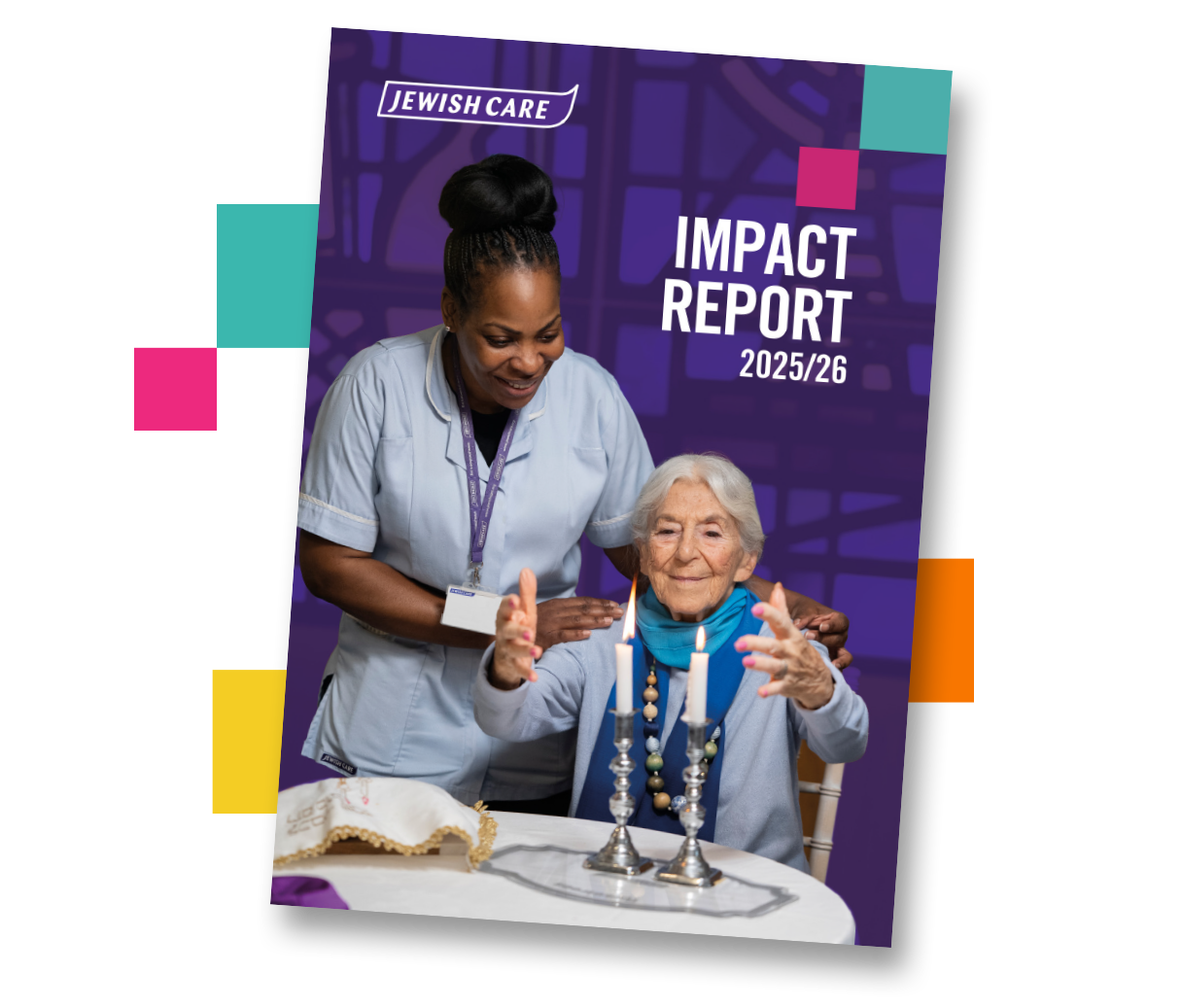
Jewish Care supports people across residential care, retirement living, community and dementia services, social
work and community support, and mental health services through Jami.
Our services at a glance
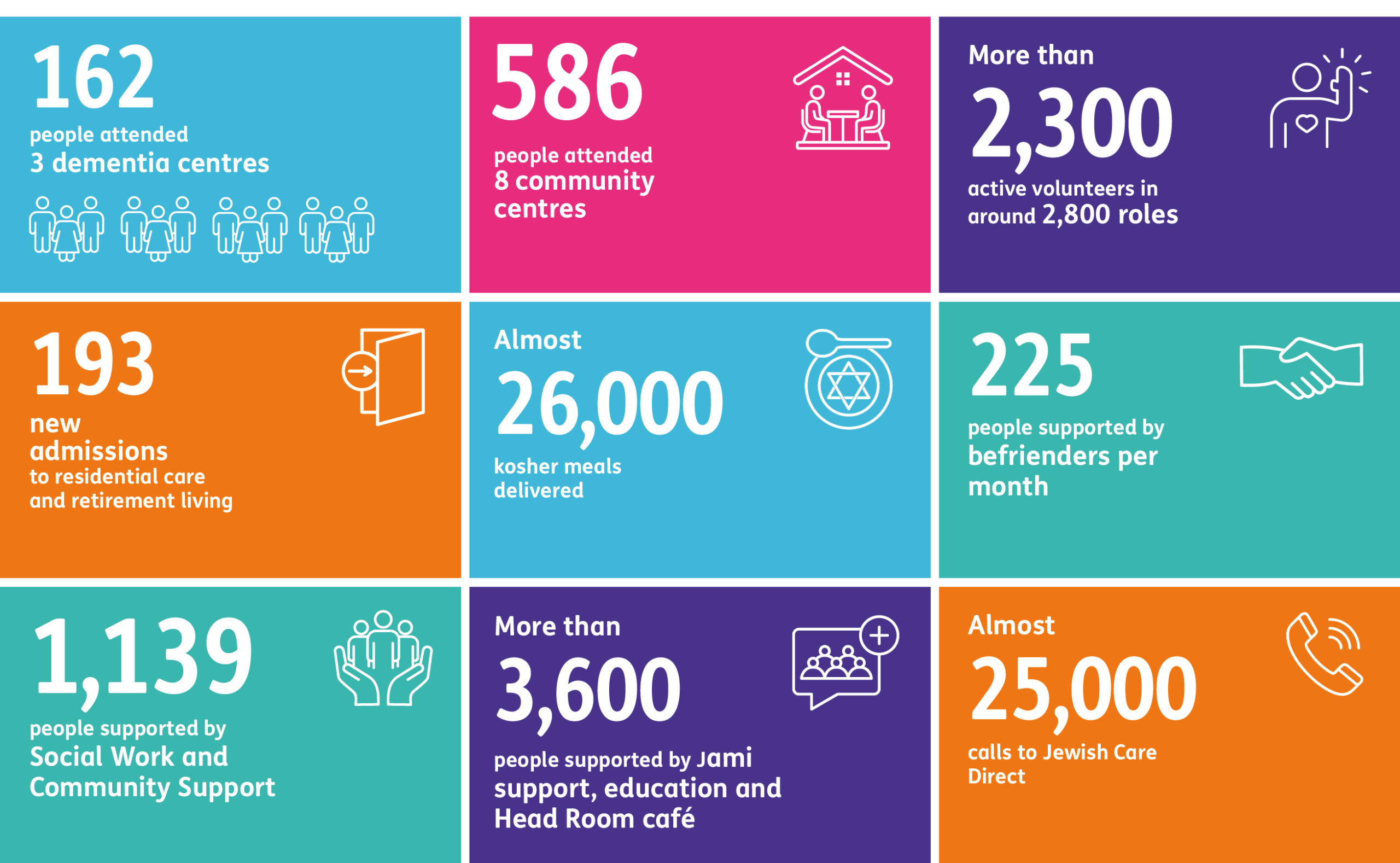
The difference we made
Jewish Care supports people across residential care, retirement living, community and dementia services, social work and community support, and mental health services through Jami.
In 2025/26, the evidence showed positive outcomes across the four pillars of change defined in our new Impact Model.
The strongest evidence related to connection – people feeling less isolated, more socially connected and part of a community.
Intended outcomes
People in the Jewish community have the knowledge, skills and resilience to make informed choices, take control and have agency on their journey.
Independence in retirement living
Retirement Living residents who responded to the survey described being able to live independently while knowing support is available when needed.
Influencing the service
Many respondents felt able to influence the service they receive:
Retirement Living: 97% agreed or strongly agreed that staff and management listen to them (73 responses, 66% strongly agreed).
Care Homes: 90% said they had opportunities to provide feedback and influence the activity programme (146 responses).
Day Centres: 69% agreed they had opportunities to provide feedback and influence the programme.
Informed choice
Results from Social Work and Jami showed evidence of access to support and informed choice. 87% of Social Work respondents said the service made a difference (91 responses), while 100% of new Jami service users said they received the information they needed to decide what to do next (45 responses).
Progress on personal goals
Jami’s mental health team works with clients on goals that matter to them. Across 217 goals set with 120 clients, 51% showed meaningful improvement (meaning they exceeded a change in score of 2.45 when rating goal achievement from 0 to 10) and 48% maintained progress.
Greater knowledge in the wider community
Jami’s Education programme included a series of events, often focusing on suicide prevention and Mental Health First Aid, to equip people with the tools and knowledge to respond to people in need of support in their own communities. Following training, 98% agreed that they have gained knowledge, skills or ideas about the topic of the training (99 responses).
Intended outcomes
People in the Jewish community have their health needs met. They are better able to cope with mental and physical health challenges and experience improved wellbeing.
Across several services, people reported feeling safer, experiencing improved mood and mental wellbeing, coping better and benefitting from cognitive stimulation. Evidence relating to physical health was less strong and may not yet be fully captured by current data.
Sense of safety
In Retirement Living, the clearest outcome was sense of safety: 99% agreed or strongly agreed that they feel safe living there (72 responses, 64% strongly agreed).
Improving wellbeing
Day Centre: 90% of respondents said attending helps maintain their mental wellbeing (163 responses); 68% said it helps maintain their fitness level (161 responses).
Dementia Day Centres: 100% said they enjoyed their day, with 94% giving a score of 5 out of 5 (34 responses). Families described the centres as a “lifeline”, offering respite, reassurance and peace of mind.
Befriending: 93% agreed or strongly agreed that the service lifts their spirit and mood (44 responses, 51% strongly agreed).
Better mental health
Jami combines survey findings with validated outcome measures completed throughout the year.
In the annual survey, 76% of respondents said Jami contributed a lot or a moderate amount to improvements in their mental health and wellbeing, and 76% said they cope better than before (109 responses).
Data from the outcome measure IROC (Individual Recovery Outcome Counter) showed that among 64 adult service users, 60% improved, and 3% maintained their score. In counselling, only 4% of clients began at a healthy or low level of distress, compared with 34% at the end of therapy.
Intended outcomes
People in the Jewish community can engage meaningfully, helping them to feel less lonely or isolated, and part of a community.
Social connection and sense of belonging
Retirement Living: 91% agreed or strongly agreed that they feel involved and part of the community (71 responses, 49% strongly agreed).
Care Homes: 92% agreed or strongly agreed that the activities provide opportunities to socialise and develop friendships (154 responses, 26% strongly agreed).
Day Centres: connection was the most reported area of impact, including meeting others, getting out of the house, developing friendships, feeling part of a supportive community, and engaging in meaningful activity. 96% agreed the centre enables them to connect with others (164 responses).
Befriending: 85% agreed or strongly agreed that the service reduces loneliness (44 responses, 43% strongly agreed).
Jami: 87% agreed or strongly agreed that they feel part of a community of peers who understand and help them (110 responses, 47% strongly agreed).
Jewish connection
Retirement Living, Care Homes, Day Centres and Dementia Day Centres all reported high percentages of respondents (82–93%) who agreed that the service helps to connect them to their Jewish identity or Judaism in general.
Intended outcomes
People in the Jewish community feel heard and understood. They feel comfortable to be themselves and receive support that is person-centred, and respects their identity, needs and wishes.
Identity and self-worth are reflected in people feeling heard, understood, accepted, purposeful and valued. The strongest evidence came from Day Centres and Jami.
In Day Centres, the most frequently reported outcome in this area was a greater sense of purpose, with respondents describing the centres as providing routine, structure, motivation and a “reason to get up in the morning”.
Jami service users also described feeling heard and accepted. Clients described staff listening in a non-judgemental way and offering a safe space to talk.
In Counselling: 99% reported feeling supported by their therapist and 95% felt understood (81 responses).
Across Jami: 88% agreed or strongly agreed that they are in a safe space where they are accepted for who they are (110 responses).
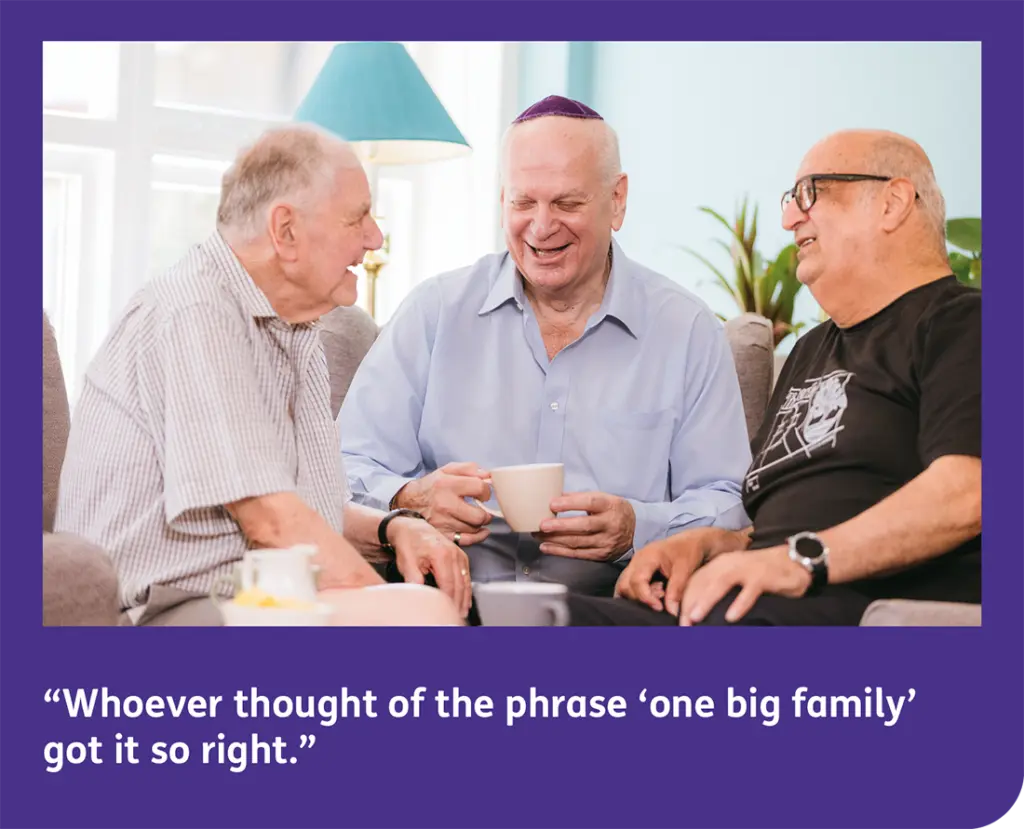
One Big Family at Selig Court
After a series of falls, 97-year-old David returned to Selig Court from hospital on end-of-life care, with his future uncertain. At first he found it difficult to accept support, but personalised care and reassurance helped him build trust, feel safer and become more settled. He is now involved in decisions about his care and has chosen to remain at Selig Court, where he can spend time with his family.
From fear and uncertainty to hope and recovery
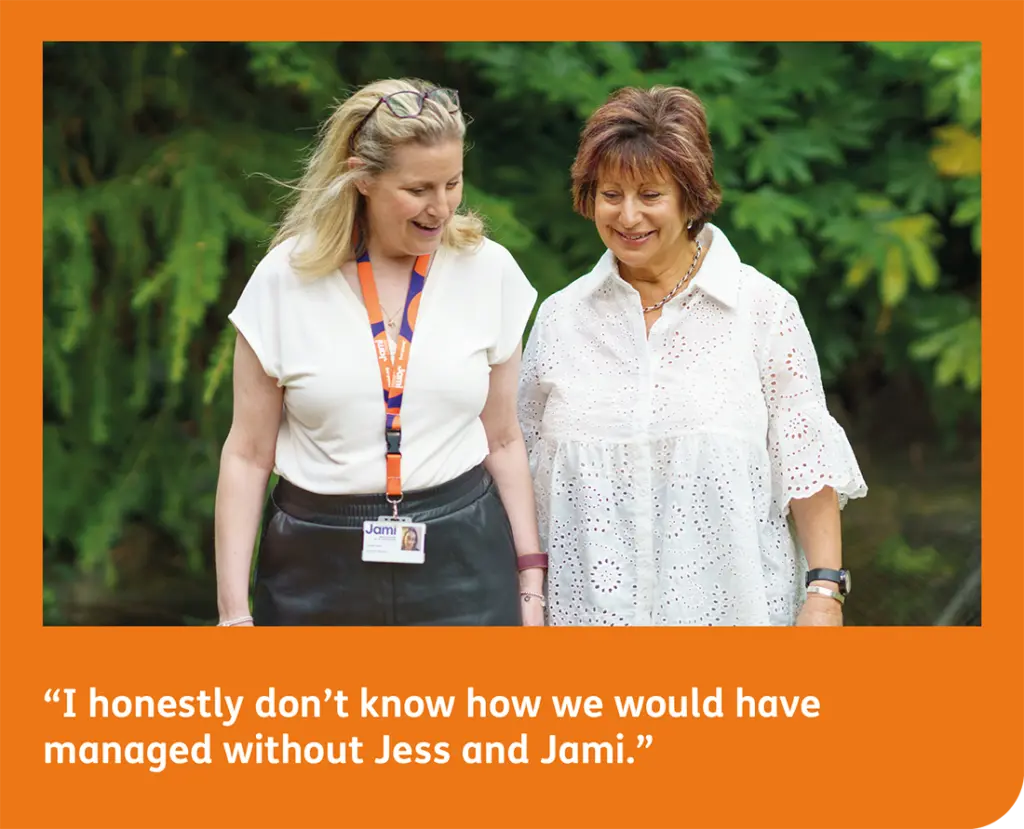
When Aviva and her husband discovered their son was self-harming and experiencing suicidal thoughts, they turned to Jami for support. Weekly meetings with a peer support worker gave them a safe space to talk, build coping strategies and find new ways to support their son and themselves. Aviva said the support helped the family hold onto hope during his recovery.
One connection, three generations
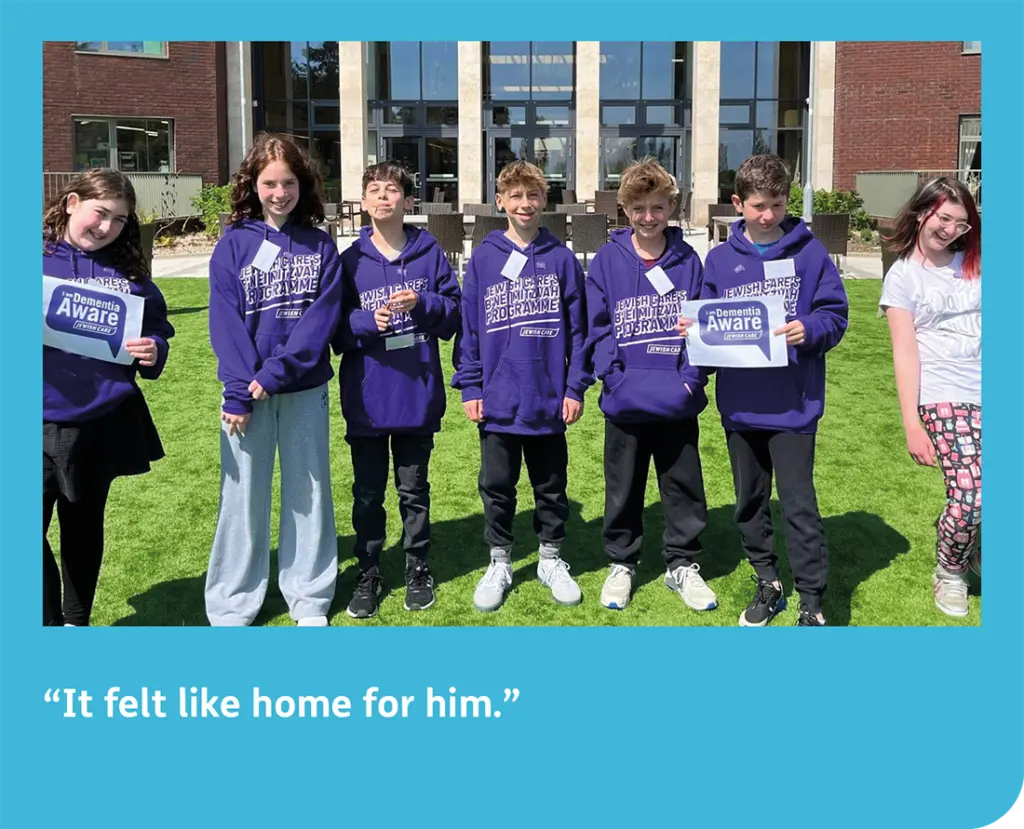
Daniel joined a Bnei Mitzvah leadership and volunteering session and enjoyed the experience so much that he now volunteers every school holiday. That first connection led Jewish Care to support his wider family too.
His grandfather, who is living with Alzheimer’s, now regularly attends the Noé Dementia Centre; his wife has joined Carers’ Tea for peer support; and Daniel’s mum is interested in volunteering herself.
Feeling informed, heard and in control
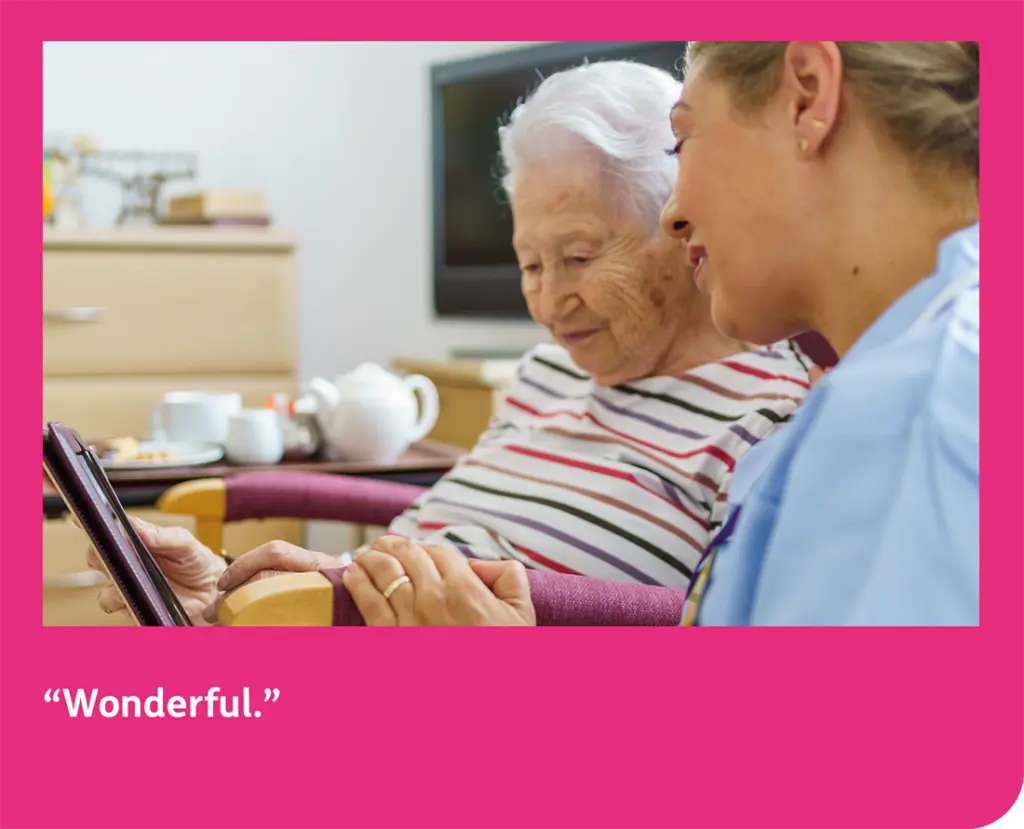
At a Dementia Carers’ Tea, Rachel described the support she received from Sarah, a Jewish Care social worker, as “wonderful”. Sarah listened to her situation and explained information in a way that made sense, helping Rachel feel calmer, better informed and more confident about what lay ahead.
Impact is also about understanding where we can do better
Impact Report 2025/26
Discover the stories, evidence and learning
behind the numbers and see how Jewish Care is
making a difference across our community.