
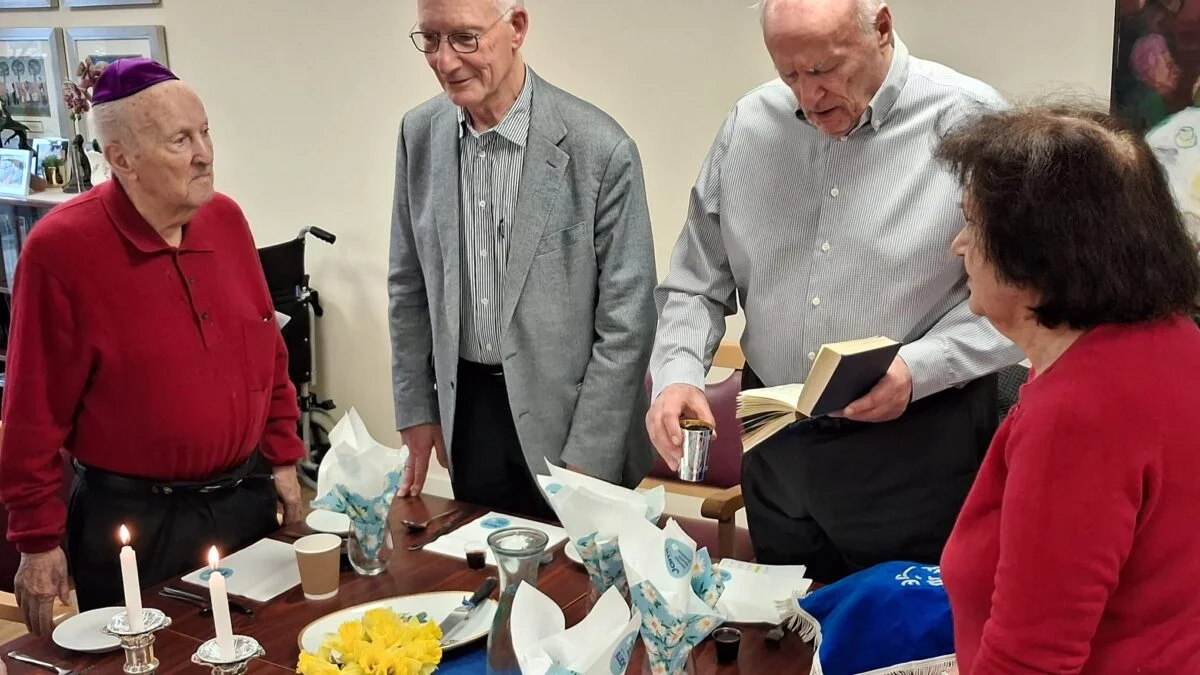
The community came out in force on 23–24 January to mark the 10th Jami Mental Health Shabbat, centred on “bringing mental health to the table”. Taking place annually on Parashat Bo – when the plague of darkness is read – the Shabbat encourages open, stigma free conversations about mental illness and distress.
This year, synagogues, schools, university J Socs, families and individuals across the community took part, alongside people who use Jami and Jewish Care’s services.
Sharing meals, sharing conversations
Food and gathering proved a powerful way to open dialogue. The Jewish Care Families Committee hosted a Sephardi cookery demonstration with food writer Jo Nissim to raise funds for Jami Mental Health Shabbat. And, at Jewish Care’s Michael Sobell Centre, members joined with Norwood residents for a joint Challah Make while learning about Jami’s services.
At Head Room, Jami’s social enterprise café, supported by The Maurice Wohl Charitable Foundation, over 40 community members, volunteers and staff attended the café’s first Friday night dinner. Guests of all faiths were welcomed, with volunteers guiding conversations around mental health awareness and community support. Gay, a regular participant at the groups, said, “I felt very welcome. The food was generous and delicious, and I hope this event will be repeated.”
Head Room also welcomed 11 members of Jewish Care’s Michael Sobell Centre for a weekday lunch, where they learned about Jami’s services and the café’s Pay it Forward scheme. Centre coordinator Lauren Rose said, “Everyone really enjoyed the ambience at Head Room. They thought the Pay it Forward scheme was an amazing idea.”
At Jewish Care’s Holocaust Survivors Centre, members enjoyed a heimishe pre-Shabbat lunch with music and song. And in Edinburgh, Scotland chaplain Eliran Shabo held a Friday night dinner for university students, making use of the Jami Mental Health Shabbat toolkit to give a D’var Torah and encourage discussion.
Community led initiatives
Families and individuals embraced Jami’s Host a Meal initiative. Amy asked guests to donate to Jami instead of bringing gifts, saying, “Jami has been an important charity to my own family when we were in crisis. It’s a moment to reflect on our mental health and normalise these conversations.”
Zoe, whose dinner also marked her daughter’s birthday, used Jami’s Host a Meal toolkit to enhance the evening. She said, “Jami has been a vital support to my son over the last nine months.”
Jami Ambassador Victoria hosted a dessert-themed Friday night in honour of her late brother, who would have been 50, to support Jami’s work.
And, on the Wednesday evening before Jami Mental Health Shabbat, Head Room hosted a special music group. Sam, who attends regularly, said, “Coming to the group makes me feel joyful, relaxed and engaged. And Jami Mental Health Shabbat gives me a sense of belonging.”
Synagogues engage with mental health
Many synagogues made use of Jami’s Mental Health Shabbat Toolkit, as well as hosting activities and speakers. Hampstead Garden United Synagogue featured speakers including Jewish Care Chair Marcus Sperber, GP and author Dr Ellie Cannon, Beyond COO Julia Clarfield, and Chazan Avromi Freilich, who shared personal, clinical and lived-experience insights.
Mosaic Masorti, Stanmore, heard from Dr Leon Rosewicz on ADHD and autism. At Bushey United Synagogue, Dr Sabrina Cohen Hatton, Chief Fire Officer of Hampshire & Isle of Wight, shared her powerful story of resilience from teenage homelessness to leadership. Borehamwood & Elstree Synagogue at Croxdale hosted a Samaritan volunteer and the mother of Oli Leigh, founder of the suicide prevention charity in his name. At New London Synagogue, Jami’s Emma Dorman spoke on digital resilience, reflecting themes from Jami’s guide, Plugged In, Switched On. And Kinloss Finchley United Synagogue heard from Jewish Care’s Bola Owoade on anxiety and self-care.
Jami Ambassadors also contributed across the community. David Chernick spoke at Borehamwood & Elstree Synagogue at Yavneh, while Joey Kolirin addressed work burnout and anxiety at a Young Jami Jewish Care Committee Challah Make. Joey said, “Jami’s one-to-one therapy was lifesaving. Head Room café allowed me to feel normal again.”
If you need support or are supporting someone who needs help, visit jamiuk.org/get-support/ or contact 020 8458 2223.